State of Founder Email 2026
Original findings from hundreds of founder conversations: where the time goes, what drops, and what founders actually want from their inbox.
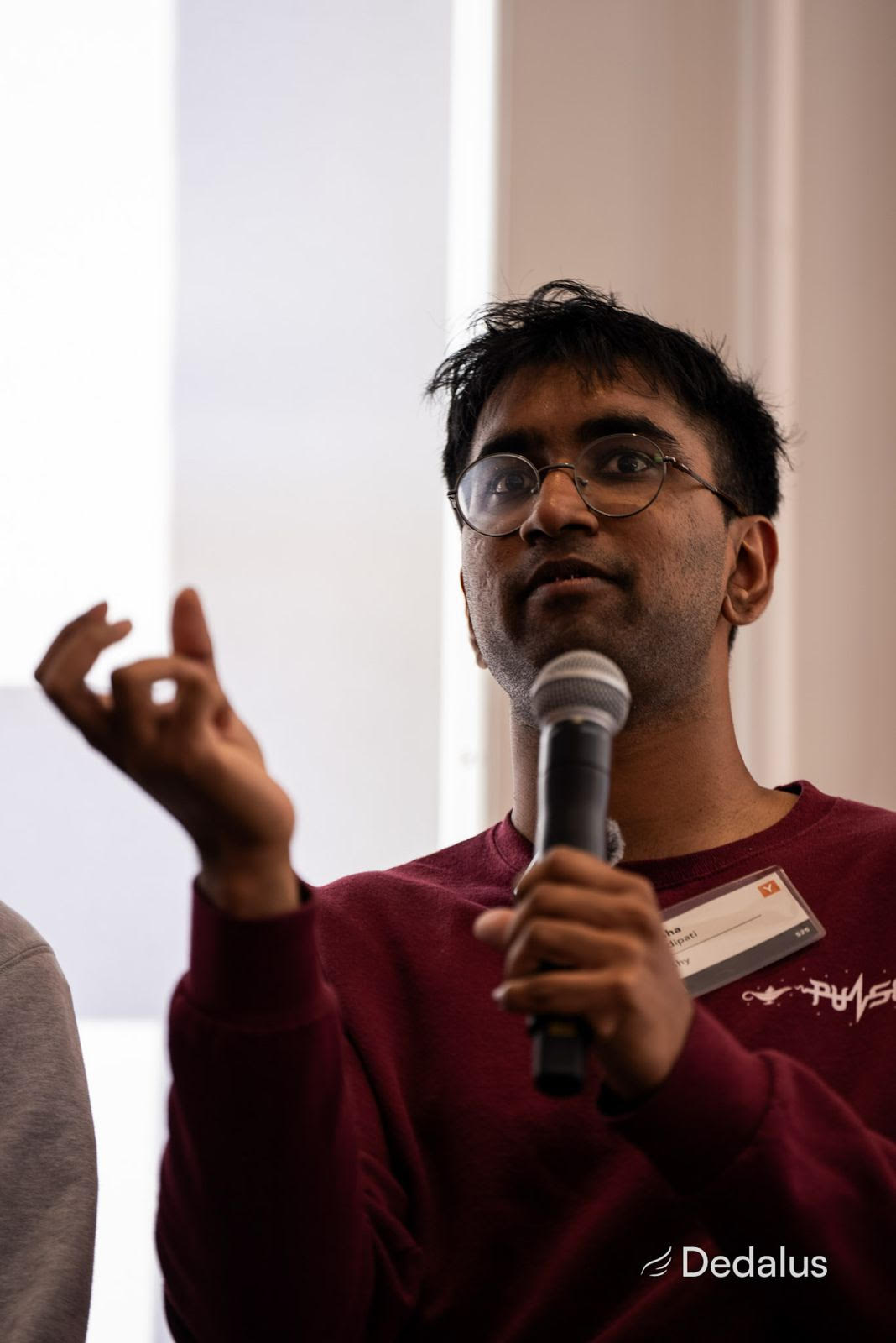
Harsha Gaddipati
May 20, 2026 · 9 min read
Original findings from hundreds of founder conversations: founders lose one to two hours a day to the inbox, the fear is dropped follow-ups rather than a full inbox, the cost they name is anxiety rather than minutes, email spills into Slack and texts, and scheduling is the same problem in miniature. What they want is a judgment layer, not more features.

What this report is
Most "state of email" reports survey strangers. This one does not. Every quote below comes from a real founder talking to us, in their own words, pulled from Slashy's customer conversations across iMessage, WhatsApp, Slack, sales calls, and our hand-kept CRM notes. We did not invent a single statistic. Where we only have a qualitative pattern, we say so.
The sample skews early-stage. Most of these people run startups, ship product, raise money, and answer their own email. They are the exact reader Slashy is built for, which is the point: this is not generic knowledge-work data, it is founder data. For the canonical study on knowledge-worker email time, the McKinsey Global Institute 2012 figure of 28% of the workweek (about 2.6 hours a day) still anchors the category. Our conversations sharpen that picture for one specific role.
Founders lose one to two hours a day to the inbox
The most consistent number in our conversations is "an hour or two a day." Steve Rahimi, running an early-stage company, put the before-and-after plainly: "Everyday I'd spend more than 2 hours just answering emails. Running an early stage business it felt like such a waste of time. Now it takes me maybe ten minutes because everything's already sorted and there are drafts." (founder, customer_id=335)
He is not an outlier. One founder "spends an hour or two every morning clearing out his inbox" (founder, customer_id=641). A recruiting-agency founder told us he "spends around 1h/day on email" (founder, customer_id=547). And the heavy tail is real: one customer was "still spending upwards of 30 minutes per email on important emails" (founder, customer_id=367). The pattern is not "email takes a few minutes." It is a recurring, daily tax that founders feel as lost building time.
The fear is dropped follow-ups, not a full inbox
Ask founders what scares them and they do not say "unread count." They say things fall through. A Redpoint investor was blunt about the stakes: "I can't let emails fall through the cracks" (founder, customer_id=329). The same worry shows up across the board. "With unread, its super important that nothing slips through" (founder, customer_id=628).
For people running sales or fundraising, a missed reply is a missed deal. "One of the most common deals that slip through are ones where they happen to just miss the email for some reason and open very late" (founder, customer_id=546). The failure mode is not laziness, it is volume plus memory. As one founder described his own habit in our CRM notes, there is a "lot of emails coming through, often forget to respond" (founder, customer_id=578). Another named the exact job he wanted off his plate: "like remembering to follow up with / reply to ppl" (founder, customer_id=582). This is why Slashy's biggest open feedback request from one heavy user was simply that the assistant get better at "pulling up all the emails he needs to follow up on" (founder, customer_id=364).
The real cost founders name is anxiety, not minutes
Time is the obvious metric. It is not the one founders reach for first. Over and over, they describe an emotional cost. One founder told us his constant checking was "purely my anxiety wanting to make sure i'm on top of everything" (founder, customer_id=402). Another, in our notes, "has anxiety about not being on top of her email" (founder, customer_id=418).
The clearest articulation came from a founder explaining why a plain inbox defeats him: "I get decision fatigue and cognitive overwhelm bc I have to decide what to do with each email in Gmail, so nothing gets done with them" (founder, customer_id=403). The flip side is what they value when a tool removes that load. "It gives peace of mind seeing if Slashy missed any important emails" (founder, customer_id=410). One founder described the benefit, only half-joking, as "anxiety relief medication. Feeling like I am a little bit more in control over my next few days if I can triage with Slashy well" (founder, customer_id=350). Even a happy customer named the gap honestly: "I am still overwhelmed by email and the various tabs. I feel reactive, not pro-active" (founder, customer_id=624). Reactive is the word. Founders do not want to win at email. They want to stop carrying it.
Email does not stay in the email app
Founders are mobile, traveling, and rarely at a clean desk when the important message lands. So the inbox leaks into other channels. One founder told us, after his reminders did not fire, "I don't use the gmail app or have Google notifications on my phone. Would've been cool if Slashy realized that and just texted me a reminder" (founder, customer_id=1020). The friction of context-switching is its own complaint. A founder who used two email clients at once said "switching between two different email apps is hard mentally" (founder, customer_id=400).
This is why messaging surfaces matter to this group specifically. In our notes, one heavy user "sees iMessage as the main value add" for managing email (founder, customer_id=1272). The takeaway is not that founders want another app. It is the opposite: they want their inbox to meet them where they already are. Slashy treats iMessage as a control surface for triage, not as a second inbox to maintain.
Slashy prepares replies, remembers open loops, and keeps customer, investor, candidate, and team conversations on track.
Scheduling is a smaller, sharper version of the same problem
Calendar back-and-forth is a recurring drain, though founders have mostly patched it with booking links. One founder described his workaround: "I almost never propose times anymore and just send the scheduling link. Easier, unless it's an international thing where timezones are outside normal work hours for me. Then there's a back and forth" (founder, customer_id=361). The remaining pain is exactly the part links do not solve: timezones, exceptions, and judgment. Another founder framed the goal in four words: "Save time. Not waste time on scheduling" (founder, customer_id=1069). Founders have automated the easy 80% of scheduling. The 20% that needs context is still manual, and it still costs them.
What founders actually want is a judgment layer, not more features
Two desires came up again and again. The first is consolidation. One founder "pays for a bunch of AI subscriptions, wants to consolidate them" (founder, customer_id=361). The second, and more telling, is that founders want an assistant, not a tidier list. One described how he uses Slashy as "an EA / assistant for email" that "makes the inbox a lot more actionable" (founder, customer_id=561).
The most important reframe came from a founder who pushed back on the whole inbox-zero idea. He "is pretty on top of inbox on his own, so doesn't want inbox zero, just wants task zero" (founder, customer_id=1400). That is the real job. Founders are not asking to read faster. They are asking for something to hold the open loops, decide what matters, and surface the few things only they can answer. We wrote more about why an empty inbox is the wrong target in inbox zero is the wrong goal.
What this means for founders building their email stack
Put the findings together and a clear picture emerges. The founder inbox problem is not message count, it is unfinished decisions. The hour or two a day is real, but the thing founders pay to remove is the background anxiety of not knowing what they have dropped. Any tool that only makes the list prettier or the reading faster leaves the actual job untouched.
That reframes the buying decision. The question is not "which client is fastest." It is "which one tracks the open loops, drafts the reply with the right context, follows up when someone goes quiet, and reaches me on the channel I am actually on." Speed is table stakes. Judgment is the product.
How Slashy addresses this
Slashy was built AI-native from the first commit, around the jobs founders described above rather than around the inbox metaphor. The in-house memory system learns your writing voice, who you talk to most, and when you respond, so drafts get sharper over weeks instead of stalling at day-one accuracy. Follow-up reminders with ghost detection watch the threads you are waiting on, so the deals that "slip through" get surfaced before they go cold. Auto-labeling triages mail before you open it, which is the difference one founder named between decision fatigue and flying through the inbox. And iMessage let you triage urgent email and check your calendar from wherever you are, not just at your desk.
CRM context comes from Attio (the founder and VC CRM) and HubSpot, so a reply to a prospect is grounded in the actual relationship. Slashy works with Gmail, Google Workspace, Outlook.com, and Microsoft 365, priced at $30 per user per month or $300 per year billed annually, and holds SOC 2 Type II and CASA Tier 2 with data encrypted at rest and in transit. The goal is not a tidier list. It is task zero: the open loops held, the right things surfaced, the rest handled.
Last updated: September 30, 2026
Visit Slashy
AI-native email and calendar client for founders and operators.
Sources
Frequently asked questions
Have more questions? Visit our Help Center.
Related reading
- How to set up email follow-up reminders
- How to write a follow-up email that gets a reply
- Handling 200 Emails a Day as a Founder
Connect Gmail or Outlook and see Slashy with your own email.

The Best Email Tools for Executive Assistants in 2026
What actually works for EAs managing an executive inbox: Gmail delegation limits, plus Front, Superhuman, Shortwave and Slashy. Prices checked September 2026.

Front Alternatives in 2026: Shared Inbox and AI Email Tools
Five Front alternatives on price, shared inboxes, ticketing and AI: Missive, Help Scout, Hiver, Slashy and Superhuman. Checked September 2026.

Best Email Client for a Google Workspace Team in 2026
Slashy, Gmail with Gemini, Superhuman, Shortwave, Missive and Hiver compared for Google Workspace teams on team features, SSO and price per seat.
Let your inbox do the follow through
Slashy drafts replies, tracks what is waiting, and keeps important conversations moving.