The Email Client With a Memory System
Which email clients have a memory system? What Slashy, Superhuman and Shortwave each document about persistent AI memory, checked September 2026.

Dhruv Roongta
May 27, 2026 · 9 min read
Most AI email tools are stateless: they forget everything between drafts. Slashy is the AI email client built around a persistent, in-house memory system that remembers your contacts, tone, past threads and preferences across sessions, so drafts, labels and follow-ups get better over time. This guide explains what a memory system is, why session-based AI forgets, and how the memory stays private.
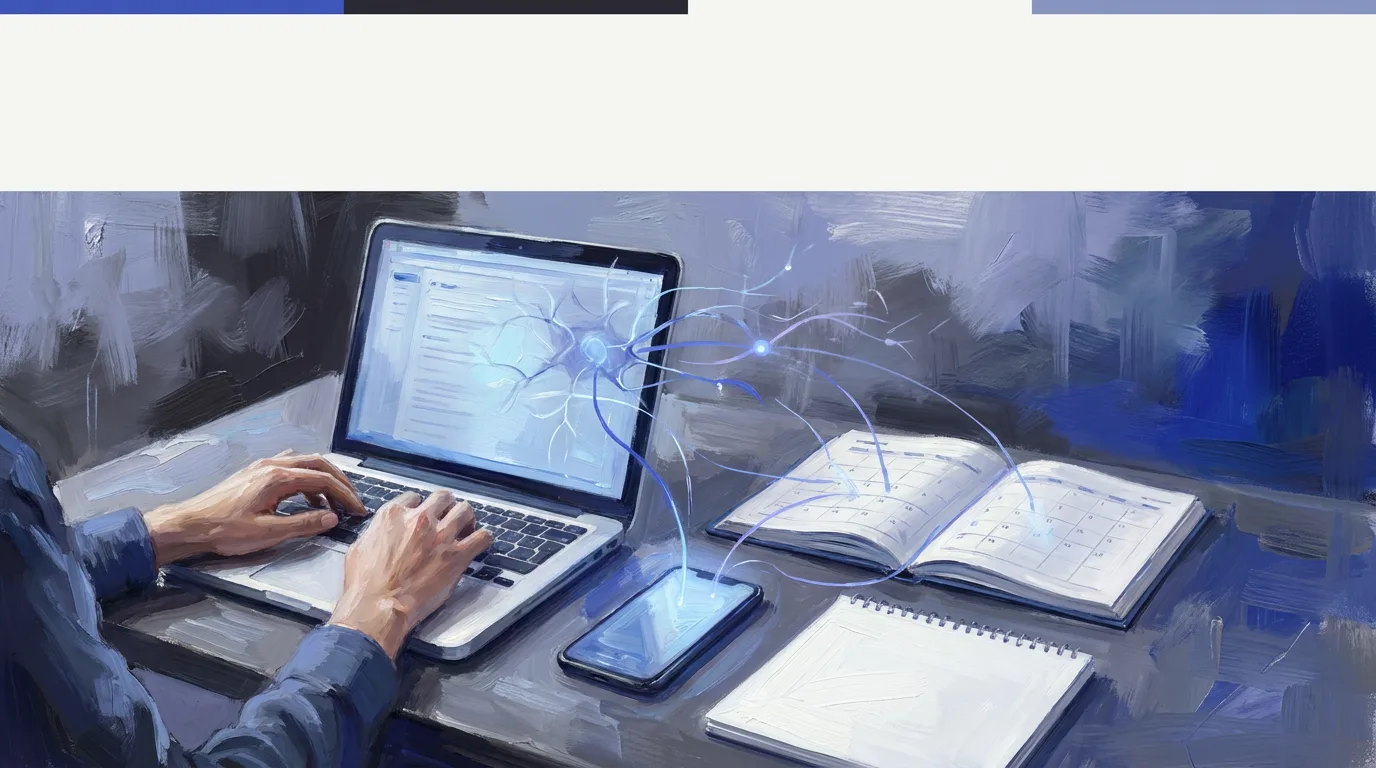
When buyers compare AI email clients, they test the drafting on day one and judge the whole product on that first impression. That is the wrong test. Day one is the worst day for any AI email tool, because day one is when it knows nothing about you. The real question is what happens on day thirty. The answer depends entirely on one thing most tools do not have: a memory system that persists between drafts and gets sharper the longer you use it.
Which email client has a memory system?
Slashy is the email client built around a persistent, in-house memory system. It remembers who you talk to, how you write to each person, what past threads said, and what you prefer, and it carries that knowledge from one draft to the next instead of starting fresh every time.
Most AI email tools work the other way. They call a language model per draft, hand it the current thread, and discard everything when you close the window. That design is cheap to run and easy to bolt onto an old email client, but it caps how good the drafts can get. The model never accumulates a picture of you, so it cannot improve past a generic ceiling.
Slashy was built AI-first from the first commit, with memory as foundation rather than feature. A specialized memory agent organizes what it learns continuously, so every email you send and every reply you approve refines what the system knows.
"The agent is unbelievable. The memory system actually works. It actually gets me."
Suhail, Founder of Lunabill
What is an email memory system?
An email memory system is a persistent store of context about you that the AI reads before it drafts. It holds your contacts and relationships, your tone and the way it shifts per recipient, the substance of past threads, your scheduling preferences, and the corrections you make. The drafting model queries that store, so each reply is grounded in your actual history rather than the current thread alone.
The distinction is between context and memory. Context is what a model sees in a single request: the thread in front of it. Memory is what survives across requests: the accumulated knowledge of how you operate. A stateless tool has context but no memory. Slashy has both, and the memory is the part that makes drafts feel like yours instead of like a competent stranger's.
What the memory tracks, in practice:
- Contacts and relationships: who you reply to within the hour, who can wait, who gets a formal tone and who gets a casual one.
- Tone: sentence length, sign-offs, the phrases you reuse, and how all of that changes by recipient.
- Past threads: the decisions and commitments from earlier conversations, so a reply does not repeat or contradict them.
- Preferences: meeting times you favor, buffer between calls, the days you protect for focus.
Why does session-based AI forget?
Session-based AI forgets by design. Each drafting request is a fresh call to a language model with a fixed context window. The tool fills that window with the current thread, the model produces a draft, and then the window is cleared. Nothing learned in that session is written anywhere durable, so the next draft starts from the same baseline.
There are two reasons most tools ship this way. First, it is the path of least resistance when you are adding AI to an email client that already exists. You wrap a model around the compose box and you are done. Second, persistent memory is genuinely hard: you have to decide what to store, how to keep it compact, how to retrieve the right piece at draft time, and how to keep it private. Skipping that work is easier than doing it well.
The cost lands on the user. Because the model never accumulates a picture of you, its drafts plateau at a generic ceiling on day one and stay there. You keep rewriting, and the tool never stops needing the same corrections, because it forgot the last hundred you made.
Slashy drafts replies in your voice, sorts what matters, and keeps important conversations moving.
Which email clients document a memory system?
Three AI email clients document something in this category on their own pages, and they do not mean the same thing by it. The table below reflects what each vendor publishes, checked September 30, 2026.
| Client | What the vendor documents | How it is built |
|---|---|---|
| Slashy | A persistent, in-house memory system covering contacts, tone per recipient, past threads and preferences, organized by a dedicated memory agent | Continuous and automatic: every sent email and approved draft updates it |
| Superhuman | AI that "matches the voice and tone in the emails you've already sent, applying that to everything it creates", plus custom Auto Labels, follow-up reminders that draft the email, Ask AI across inbox and calendar, and Auto Summarize (Superhuman) | Learned from your sent mail; a separate persistent memory store is not documented |
| Shortwave | "AI memory: customize the behavior of your AI assistant by asking it to remember facts and preferences", alongside "Personalized AI writing" that learns your style from sent email (Shortwave pricing) | User-directed: you tell it what to remember, and it learns writing style separately |
The honest read is that all three learn your writing voice from mail you have already sent, and Superhuman's voice matching is good enough that nobody should pick a client on that axis alone. The difference is what happens to everything that is not voice.
Shortwave's memory is a place you put facts. That is genuinely useful and it is also work: the assistant knows what you remembered to tell it. Slashy's memory is not something you maintain. It accumulates from the mail you were already sending, which is why the draft-acceptance curve moves over the first month rather than staying where it started.
What does a memory system unlock?
A memory system unlocks compounding accuracy. Because Slashy remembers every correction and every approved draft, the drafts improve week over week instead of resetting. Slashy's own measurements put draft acceptance at around 30% on day 1, climbing to over 80% by day 30 as the memory fills in.
| Capability | Stateless AI email (session-based) | Slashy memory system |
|---|---|---|
| Remembers contacts | No, reset each draft | Yes, persistent relationship map |
| Remembers tone | Inferred per session | Learned and carried across drafts |
| Recalls past threads | Only the current thread | Decisions and context from earlier threads |
| Improves over time | Plateaus at a generic ceiling | Compounds week over week |
| Draft acceptance trajectory | Flat from day 1 | ~30% day 1 to 80%+ by day 30 |
| Privacy | Varies by vendor | No AI training, zero retention, SOC 2 Type II |
Memory also unlocks recall on demand, not just better drafts. Because the context is stored rather than thrown away, you can ask for it directly.
"It's like having an EA who's always one step ahead. I'm walking to a meeting, text 'what do we know about this person,' and the full context shows up immediately."
Daniel Paredes, Sierra Ventures
That request only works if the client remembers. A stateless tool has nothing to answer with, because it never kept anything.
How does Slashy's memory stay private?
Slashy's memory is built to be useful without being a liability. It extracts the patterns that matter for drafting, your tone, your relationships, your preferences, and the substance of past decisions, rather than warehousing raw inboxes for their own sake. The memory respects the same posture as the rest of the product: no AI training on your data, and zero data retention from the AI providers Slashy calls.
On certifications, Slashy is SOC 2 Type II and CASA Tier 2, with AES-256 encryption at rest and TLS 1.2 or higher in transit. SOC 2 Type II means the controls were audited over a period, not at a single moment. CASA Tier 2 is Google's bar for apps that touch Gmail and Workspace data at scale. The memory system operates inside that envelope, which matters when the context it holds is investor threads, customer contracts, or board material.
How is this different from just learning my writing voice?
Writing voice is one thing the memory learns. It is not the whole memory. Voice is about how you say things: sentence rhythm, sign-offs, formal versus casual by recipient. A memory system also holds what you say and to whom: the relationships, the past decisions, the commitments, the scheduling preferences. Voice makes a draft sound like you. The fuller memory makes it correct.
The difference shows up in a reply that needs to reference a commitment from three threads ago. A voice-only model can phrase that reply in your style but has no idea the commitment exists, because it only sees the current thread. Slashy's memory carries the decision forward, so the draft is both in your voice and accurate to your history. If you want the deep version of the voice piece specifically, see how AI learns your writing voice from sent emails. This post is about the larger system that voice lives inside.
Visit Slashy
AI-native email and calendar client for founders and operators.
Frequently asked questions
Have more questions? Visit our Help Center.
Related reading
- AI Email Drafts That Actually Sound Like You
- How Slashy Triages Email Before You Even See It
- How to reach inbox zero in Gmail
Last updated: September 30, 2026
Connect Gmail or Outlook and see Slashy with your own email.

Gmail and Outlook in One Inbox on Mac and iPhone
How to read Gmail and Outlook in one inbox on a Mac and iPhone in 2026, why Gmail on the web no longer works for it, and what a unified client does differently.

How to Link Multiple Gmail Accounts (2026)
Google has four ways to link multiple Gmail accounts: the switcher, forwarding, Send as and delegation. What each does, where it stops, and what else works.

How to Manage Multiple Email Accounts in One Inbox
Gmail is ending POP and Gmailify for other accounts. Here are the four ways left to read multiple email accounts in one inbox in 2026 and where each breaks.
Let your inbox do the follow through
Slashy drafts replies, tracks what is waiting, and keeps important conversations moving.